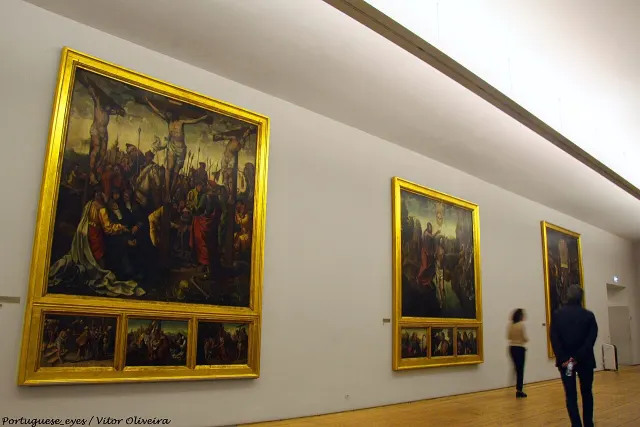
Farturas and food
The classic stop for hot farturas with sugar and cinnamon, fried eels, suckling pig sandwiches and Dão wine from the stalls.
The fair runs between August and September. See how to get to the grounds.
See what you can eat, buy and do at the fair.
The classic stop for hot farturas with sugar and cinnamon, fried eels, suckling pig sandwiches and Dão wine from the stalls.
The view over the Campo de Viriato and the lit-up city from the Ferris wheel, plus carousels and rides for every age.
The main stage hosts Portuguese and international music, with nights of fado, pop, rock and folk music. Check the line-up to choose your day.
The centuries-old free-fair tradition, with hundreds of artisans, earthenware, farm tools, regional produce and businesses from across the country.
Established by royal charter from King João I, the fair has crossed the centuries as Viseu's great summer festival.
634th edition (2026)
The guardian of Portugal's popular fairs filled the city for 31 days with shows, rides and the traditional food stalls.
Discover Viseu the rest of the year635th edition (2027)
The dates and programme for 2027 depend on the organiser's announcement. Follow updates on the official website, feirasaomateus.pt.
Keep an eye on the next editionFifteen concerts that defined the main stage at .
Fingertips (opening night)
Fernando Daniel
Maiara & Maraisa
Némanus
MC Paiva
Plutonio
Calema
Wet Bed Gang
Os Quatro e Meia
Vizinhos
Bárbara Bandeira
Resistência
Átoa
Sara Correia
Deejay Telio
Line-up based on the published 2026 programme. The next edition will be confirmed at feirasaomateus.pt.
Plan your accommodation, evening clothing and route to the fair.
In August and September, demand for hotels and guesthouses in Viseu peaks. Book your stay weeks in advance.
Guide to staying in ViseuOn the Beira plateau, late-summer nights can turn cold quickly. Bring a light jacket for the concerts.
On foot, walking down from the Rossio or Cathedral to the Cava takes 10 to 15 minutes. By bus, MUV City Circuits C1 and C2 stop right at the "Feira de S. Mateus" stop.
From a royal charter of 1392 to the August and September festival on the Campo de Viriato.
The fair was born of a fair charter granted to Viseu by King João I on 10 January 1392, in the aftermath of the Castilian raids that had left the city all but destroyed. It was a free fair: those who sold there were exempt from tolls and other duties. It is now held to be the oldest in the Iberian Peninsula.
It was first held in May, lasted a month and took place on the Cava de Viriato. Only later did it move to September, around Saint Matthew's day - 21 September, still Viseu's municipal holiday. In the early twentieth century it nearly died out; the 1927 reform, led by Francisco Almeida Moreira, turned it into the fair-festival still recognisable today.
The fair's official site does not publish its history. This timeline was cross-checked against these sources:
Five guides for the rest of the visit.