
Monument
Cava de Viriato
Held to be the largest earthwork enclosure on the Iberian Peninsula, an octagon of more than 30 hectares.
History
The Cava de Viriato is an octagonal earthwork enclosure north of the historic centre. It is bounded by embankments and a moat once fed by the Pavia river and the Santiago stream. It is a National Monument, but when it was built and what it was for are still unclear.
For a long time it was thought to be a Roman camp, attributed to Decimus Junius Brutus (137-136 BC) or to Petreius and Cassius Longinus (mid-1st century BC). The municipal Visit Viseu site now presents it as a 9th-10th-century earthwork, possibly linked to Almanzor. Viriathus' name was only attached to it in the 16th century, and it comes from popular tradition, not from documents.
What you will find
- Six of the eight original embankments, which you can walk along.
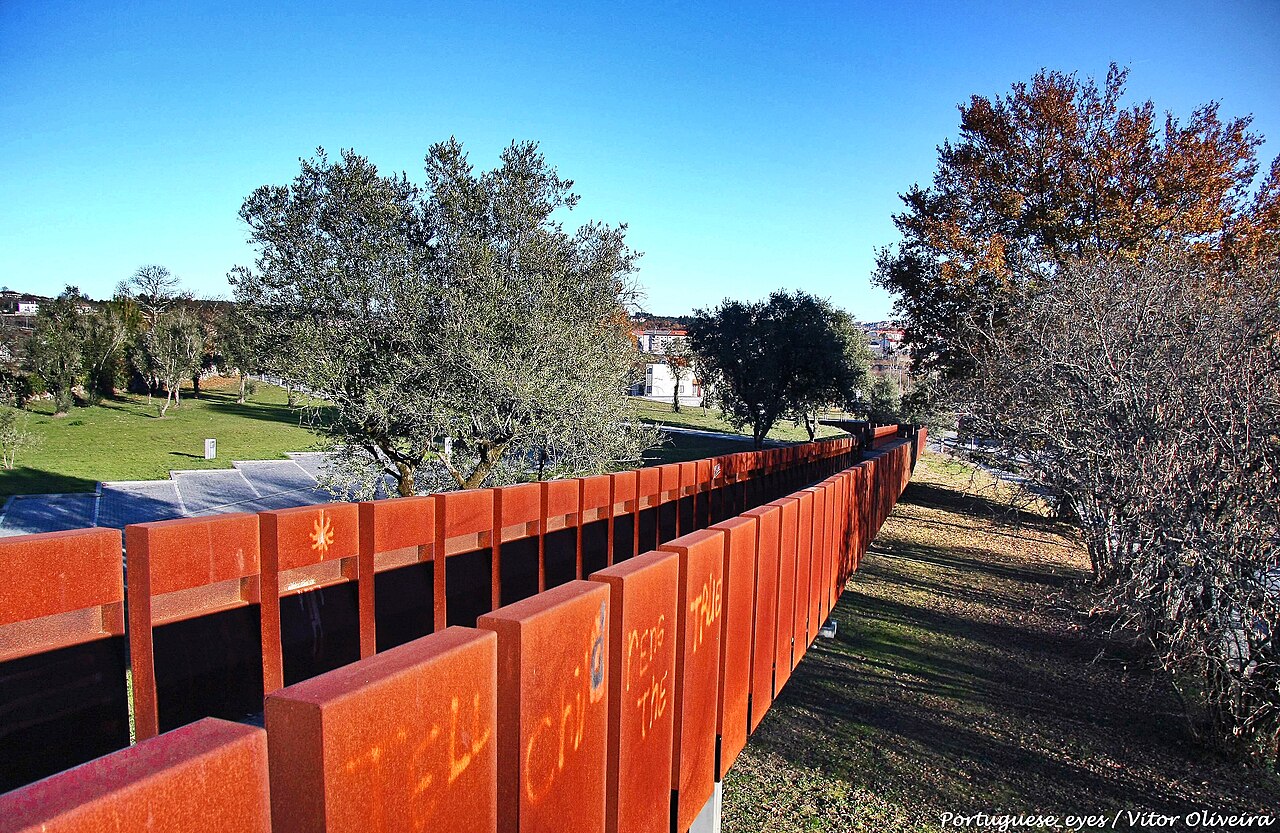
- A boardwalk that follows the octagonal outline of the enclosure.
- The statue of Viriathus by the sculptor Mariano Benlliure, from 1940.
Text checked against these sources:
Practical information
- About the monument
Large octagonal earthwork in the north of the city, about 2 km around and enclosing some 30 hectares, listed as a National Monument. Its origin is still debated and the link to Viriato only appeared in the 17th century. Recent research points to an unfinished 10th-century city project.
Sources: Viseu Património · Visit Viseu
- Google Maps
- See listing and reviews
Information from public sources and editorial review. Confirm opening hours and conditions with the establishment before travelling.
What to visit



Keep exploring Viseu
See what is on today or build your own route from the places you saved.